%20(1)_result.webp)
Why “Just Marking Up” House Plans Often Backfires
- Matthew R. Jones

- Jan 8
- 4 min read
When homeowners or builders purchase house plans online or receive drawings from another architect or draftsman, the temptation to simply mark up or tweak these existing plans can seem like an easy shortcut. Changing a window size, moving a wall, or adjusting a room layout might appear straightforward. Yet, residential construction drawings are more than just lines on paper—they form a carefully coordinated system. Even small changes can ripple through the entire design, affecting structural integrity, code compliance, and construction details.
This article explains why modifying existing house plans often involves more complexity than it seems. It also clarifies when minor cosmetic changes are possible and when a full redraw is the safer, clearer, and more efficient path. Understanding these factors helps homeowners and builders set realistic expectations and appreciate the professional standards that ensure buildable, permit-ready drawings.
How Residential Construction Drawings Work as a Coordinated System
House plans are not isolated sketches. They represent a network of interrelated components that must work together to create a safe, functional, and code-compliant home. The architectural plans, structural drawings, elevations, sections, and details all connect and depend on each other.
For example, moving a wall on the floor plan affects:
Structural elements such as beams, columns, and load-bearing walls
Elevations that show the home’s exterior appearance and rooflines
Sections that detail vertical relationships between floors and ceilings
Mechanical, electrical, and plumbing layouts that run through walls and ceilings
Code compliance related to fire safety, egress, and energy efficiency
A seemingly simple change like enlarging a window can require recalculating structural support, adjusting exterior finishes, and revisiting energy code requirements. Without careful coordination, these changes can lead to costly mistakes, delays, or permit rejections.
Minor Cosmetic Adjustments Versus Substantial Reworking
Not all changes carry the same weight. Some adjustments are purely cosmetic and do not affect the building’s structure or code compliance. Examples include:
Changing paint colors or finishes
Swapping cabinetry styles
Adjusting interior trim details
These changes usually do not require revisiting the entire set of drawings.
On the other hand, changes that affect the building’s footprint, structural system, or code-related features require more than a quick markup. Examples include:
Moving or removing walls
Changing window or door sizes or locations
Altering rooflines or ceiling heights
Modifying stair locations or layouts
Such changes often require recalculating loads, updating structural details, and ensuring compliance with local building codes. This process can be as complex as creating new drawings from scratch.
Common Issues with Purchased Online Plans
House plans purchased online can be a convenient starting point, but they come with challenges:
Unknown code assumptions: Plans may be based on codes from different states or regions, which may not match local requirements.
Lack of local compliance: Energy codes, fire safety rules, and zoning regulations vary widely and may not be reflected in generic plans.
Missing structural coordination: Structural drawings may be generic or absent, requiring additional engineering input.
Permit review challenges: Plans not tailored to local standards often face delays or rejections during permit review.
Because these plans are designed for broad use, they rarely include the detailed coordination needed for a specific site, climate, or jurisdiction.
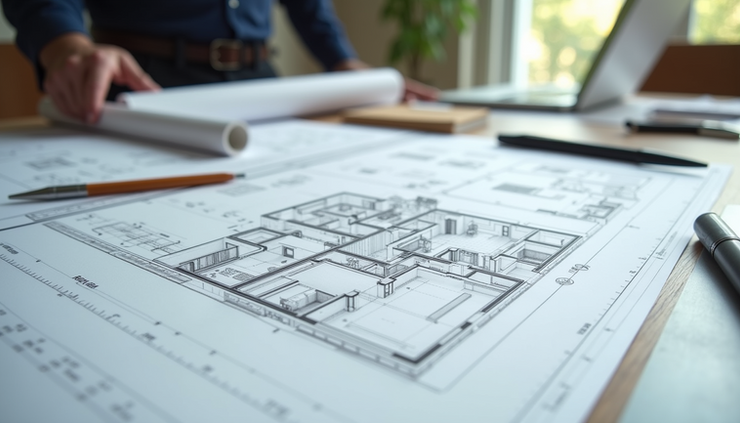
Detailed architectural house plans on drafting table showing interconnected structural and design elements
Why Many Drafting Studios Avoid Marking Up Third-Party Drawings
Professional drafting studios often decline requests to directly mark up or tweak third-party drawings or PDFs. This approach is not about avoiding responsibility or blaming others. Instead, it reflects a commitment to:
Accuracy: Ensuring all changes are fully coordinated across all drawings
Coordination: Avoiding overlooked conflicts between architectural, structural, and code-related elements
Clarity: Producing clear, consistent, and permit-ready documents without confusion from layered markups
Responsibility: Taking ownership of the entire set of drawings rather than patching incomplete or inconsistent plans
Marking up existing plans can create hidden errors or conflicts that only become apparent during construction or permit review. Redrawing from scratch allows the drafting team to verify every detail and integrate changes seamlessly.
Why Redrawing Plans Is Often the Safer and More Efficient Choice
Redrawing plans may seem like extra work upfront, but it offers several advantages:
Clear documentation: A fresh set of drawings reflects all changes clearly and consistently
Code compliance: Plans can be tailored to local codes and permit requirements from the start
Structural coordination: Structural and architectural elements are designed together, reducing surprises
Reduced risk: Fewer errors and omissions mean smoother construction and fewer costly change orders
Better communication: Builders, inspectors, and subcontractors receive a single, authoritative set of plans
In many cases, redrawing saves time and money by avoiding the confusion and rework that can arise from piecemeal markups.
Protecting Homeowners and Builders During Permitting and Construction
A well-coordinated set of plans protects everyone involved. For homeowners, it means their vision is realized safely and efficiently. For builders, it means fewer delays, change orders, and disputes.
Clear, permit-ready drawings help local building departments approve projects faster. They also provide a reliable reference during construction, reducing misunderstandings and errors.
Choosing to redraw plans rather than tweak existing ones is an investment in quality, clarity, and peace of mind.
Final Thoughts
Modifying existing house plans, especially those purchased online or created by others, involves more complexity than it may seem. Residential construction drawings function as a coordinated system where even small changes can affect many aspects of the design.
Understanding the difference between minor cosmetic tweaks and substantial changes helps set realistic expectations. Recognizing the common challenges with third-party plans clarifies why many professionals prefer to redraw rather than mark up existing drawings.


Comments